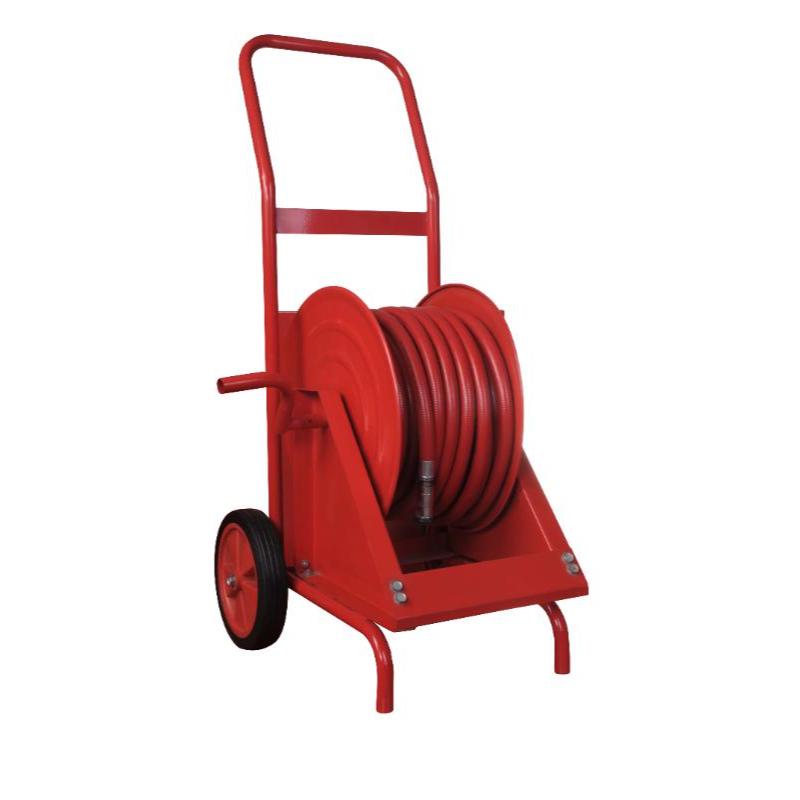
Potable water hoses are essential components in various industries for transporting drinking water safely and efficiently. When sourcing these hoses, B2B buyers often have concerns about material quality, compliance with safety standards, and compatibility with specific applications. This article aims to provide practical insights into evaluating potable water hose roller, covering key specifications, cost factors, installation requirements, and applications across different sectors.
When sourcing potable water hoses, several key specifications need to be evaluated to ensure safety and performance. Firstly, material selection is crucial. Potable water hose roller are typically made from materials that do not leach harmful chemicals into the water. Common materials include FDA-approved polyvinyl chloride (PVC) and thermoplastic elastomer, which provide flexibility and durability. Another important specification is diameter and pressure rating. The hose diameter must match the intended flow rates, while the pressure rating should accommodate the operational conditions of the application. For instance, a hose used in firefighting or emergency response scenarios may require higher pressure ratings to withstand robust usage. Length and coupling types are also significant. Hoses come in various lengths, and buyers should select a length that minimizes the need for additional fittings. Couplings should be compatible with existing water supply systems to ensure easy integration and prevent leaks. Lastly, ensure that the hoses comply with relevant certifications such as NSF/ANSI 61, which ensures the safety and quality of materials used in drinking water systems.
Buyers should be aware of several factors when purchasing potable water hose roller. Understanding the specific application is critical whether the hose will be used for emergency services, agricultural irrigation, or construction. Each application may have unique requirements, such as temperature resistance or chemical exposure. Additionally, buyers should consider customization options. Many manufacturers, like Jiangsu Nantong Longtao Fire-Hose Group Co., Ltd., offer customization capabilities, allowing buyers to specify lengths, colors, and coupling types based on their needs. This flexibility can enhance the hose's usability in specific scenarios. Buyers should also assess the minimum order quantity (MOQ) and delivery timelines. Understanding these factors helps in planning and avoids unexpected delays in supply. Furthermore, it is advisable to request samples for testing, as this provides a tangible reference to evaluate quality and performance before committing to larger orders.
The cost of potable water hose roller can vary significantly based on several factors. Material choice is often the most substantial cost driver. Higher-quality materials that meet safety standards typically command a higher price but provide better longevity and performance. Manufacturing processes also affect pricing. Hoses produced via advanced methods, such as extrusion or blow-molding, may incur higher production costs than simpler manufacturing methods. Buyers should inquire about the production capabilities of potential suppliers to understand the cost implications. Furthermore, customization needs can influence pricing. While standard hoses may be more economical, customized solutions designed for specific applications may carry a premium. Lastly, consider the total cost of ownership. A lower initial price may not reflect the hose's long-term reliability and maintenance costs. Evaluating the lifespan and warranty offered by the manufacturer will provide a clearer picture of the overall investment.
Installation requirements for potable water hose roller can vary based on the application and environment. Buyers should take note of the operating pressure and temperature conditions under which the hose will function. Ensuring that the hose meets these specifications is crucial for safe operation. Proper coupling and fitting installation are also essential. The hose should be securely attached to prevent leaks, which can lead to contamination of the potable water supply. Buyers should ensure that couplings are compatible with existing systems and that the installation adheres to local plumbing codes. Additionally, buyers should consider the storage and handling of hoses. Proper storage can prevent damage and prolong the life of the hose. Hoses should be kept away from direct sunlight and extreme temperatures when not in use, as these can degrade the materials over time.
With an annual production capacity of 10 million meters of fire hose and 7,000 sets of fire hydrant boxes, the company demonstrates its ability to meet large-scale demands efficiently. The product range is extensive, including lined fire hoses (single and double jacket), double-coated fire hoses, fire hose reels, plastic-coated hoses, spray fire hoses, garden hoses, and specialized nozzles and couplings that meet various international standards. This diversity allows the company to cater to a wide array of customer needs across different markets.
The company places a strong emphasis on quality, which is fundamental to its survival and success. It is dedicated to the manufacturing, production, and research and development of fire-fighting equipment, including custom-made solutions for domestic and foreign professional fire brigades. The company holds multiple patent certificates for its independently developed intellectual property products, showcasing its innovative capabilities and commitment to advancing fire safety technology.
Jiangsu Nantong Longtao Fire-Hose Group Co., Ltd. is officially recognized by the Ministry of Public Security as a designated enterprise for the production of fire hoses, fire hydrants, and fire boxes. This designation underscores the company's compliance with stringent national standards and its commitment to producing high-quality fire safety equipment. Being a government-designated enterprise also reflects the company's reliability and trustworthiness in the industry.
Jiangsu Nantong Longtao Fire-Hose Group Co., Ltd. has successfully exported its high-quality products to numerous countries, including the United States, Germany, Italy, Russia, South Korea, Japan, Vietnam, and the Middle East. The company adheres to a customer-first philosophy, offering high-quality, cost-effective products and services. Its commitment to honest cooperation and mutual benefit ensures long-term partnerships and a win-win situation for both the company and its clients. This global presence and customer-centric approach highlight the company's ability to compete and thrive in the international market.
Potable water hoses find applications across a wide range of industries and projects. In the agricultural sector, they are employed for irrigation and transporting water to crops, ensuring that the water remains safe for consumption. Their flexibility and durability make them ideal for various terrains. In the construction industry, potable water hose roller are used to supply water for mixing concrete and other construction processes. Their compatibility with various fittings allows for seamless integration into existing water supply systems. Emergency services also rely heavily on potable water hose roller for disaster response and firefighting operations. These hoses must be robust, capable of handling high pressures, and easy to deploy in critical situations. Moreover, the food and beverage industry utilizes potable water hose roller for transporting water in processing plants. Compliance with health and safety standards is paramount, making quality assurance a crucial factor when sourcing these hoses. Understanding the specific applications helps buyers make informed decisions about the type of hose required, ensuring compliance with safety regulations while meeting operational needs.

Welcome to Jiangsu Nantong Longtao, we are a leading manufacturer specialize in fire hoses, fire hydrants and fire boxes.
No.888 Renmin South Road, Dayu Town,Rudong County, Nantong City, Jiansu Province
Copyright © EVERBRIGHT FIRE-FIGHTING EQUIPMENT(NANTONG)CO., LTD. All Rights Reserved
 EN
 AR
 FR
 DE
 KO
 CS
 DA
 NL
 FI
 EL
 IT
 JA
 NO
 PL
 PT
 RO
 RU
 ES
 SV
 TL
 IW
 ID
 LV
 LT
 SR
 SK
 SL
 UK
 SQ
 ET
 HU
 TH
 TR
 FA
 AF
 IS
 MK
 KA
 UR
 BN